Shipping Container Home Cost Guide 2026: Budget vs. Luxury Custom Builds
Shipping container homes have surged in popularity over the past decade, offering a sustainable, modular, and often cost-effective alternative to traditional housing. But how much does it *really* cost to build one in 2026? The answer, as with most construction projects, depends on your vision—are you aiming for a no-frills budget build or a high-end custom masterpiece? To be honest, the price range is staggering, and understanding the nuances can save you thousands (or even tens of thousands) of dollars.
Interestingly enough, the allure of container homes isn’t just about affordability. Many are drawn to their industrial aesthetic, eco-friendly potential, and the flexibility they offer in design. Yet, the cost spectrum is vast, with budget builds starting as low as $30,000 and luxury custom homes exceeding $300,000. So, where does your dream home fall on this scale? Let’s break it down.
The 2026 Cost Landscape: What’s Changed Since 2020?
If you’ve researched container homes in the past, you might be surprised by the 2026 price tags. Several factors have driven costs up—or down—since the early 2020s. For starters, the global supply chain disruptions of 2020-2022 caused container prices to fluctuate wildly. While prices have stabilized, they haven’t returned to pre-pandemic lows. A standard 20-foot container now averages $2,500-$4,000, while a 40-foot high-cube container ranges from $4,500-$7,000, depending on condition and location.
Labor costs have also risen, particularly for skilled trades like welding, plumbing, and electrical work. Many experts agree that the increased demand for container homes has outpaced the availability of specialized contractors, driving up labor expenses by 15-25% since 2020. Additionally, zoning laws and building codes have evolved, with some municipalities now requiring container homes to meet the same standards as traditional builds. This can add unexpected costs, especially for insulation, structural reinforcement, and foundation work.
On the flip side, advancements in prefabrication and modular construction have streamlined the building process, reducing some expenses. Companies now offer pre-cut container kits, which can shave weeks off construction time and lower labor costs. It’s worth noting, however, that these kits often come with a premium price tag, so they’re not always the budget-friendly solution they seem.
Budget Container Homes: How Low Can You Go?
For those looking to minimize costs, a budget container home is entirely achievable—but it requires trade-offs. The most affordable builds typically involve a single 20-foot or 40-foot container, minimal modifications, and DIY labor where possible. Here’s a rough breakdown of what to expect in 2026:
- Container Purchase: $2,500-$7,000 (used containers are cheaper but may require more prep work).
- Site Preparation: $2,000-$5,000 (clearing, grading, and laying a simple foundation like concrete piers).
- Insulation: $1,500-$4,000 (spray foam or rigid board insulation for climate control).
- Basic Utilities: $5,000-$10,000 (plumbing, electrical, and HVAC for a single container).
- Interior Finishes: $3,000-$8,000 (drywall, flooring, cabinetry, and fixtures).
- Permits and Fees: $1,000-$3,000 (varies widely by location).
All told, a bare-bones budget build can start at $30,000-$50,000, but this assumes you’re handling much of the work yourself. If you hire contractors for even half the project, costs can quickly climb to $60,000-$80,000. To keep expenses down, many budget builders opt for:
- Minimalist Designs: Fewer modifications mean lower labor and material costs.
- Off-Grid Solutions: Solar panels, composting toilets, and rainwater collection can reduce utility expenses.
- Secondhand Materials: Salvaged doors, windows, and fixtures can add character without breaking the bank.
That said, it’s important to recognize the limitations of a budget build. You’ll likely sacrifice space, comfort, and long-term durability. For example, a single 20-foot container offers just 160 square feet of living space—hardly enough for a family. And while DIY labor can save money, mistakes in structural modifications or insulation can lead to costly repairs down the line.
Case Study: The $45,000 Studio Container Home
Take the example of a 2026 budget build in rural Texas. The homeowner purchased a used 40-foot container for $4,200 and spent $3,500 on site preparation, including a gravel foundation. By handling the insulation, drywall, and flooring themselves, they kept labor costs to $12,000. Basic utilities (solar power, a composting toilet, and a mini-split HVAC system) added another $8,000. The final cost? Just under $45,000 for a 320-square-foot studio with a loft bed, kitchenette, and bathroom.
The trade-offs? The home lacks a traditional plumbing system, and the open floor plan means limited privacy. But for a single occupant or a weekend getaway, it’s a functional and affordable solution.
Luxury Custom Builds: Where Costs Can Skyrocket
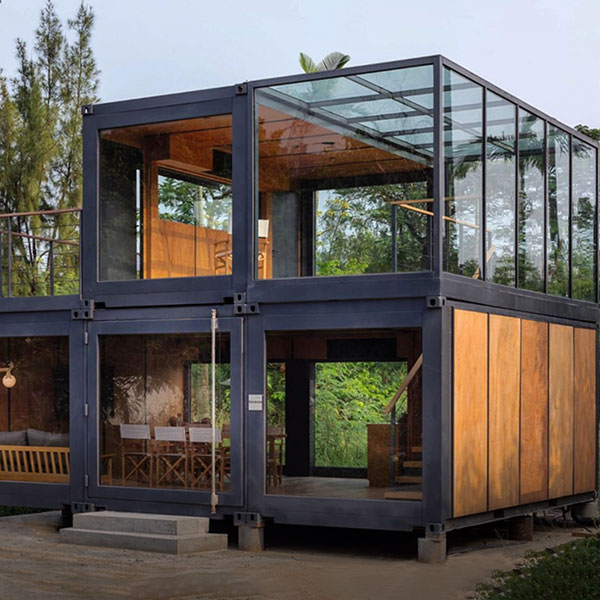
On the opposite end of the spectrum, luxury container homes are a far cry from the "tiny home" aesthetic. These builds often involve multiple containers, high-end finishes, and custom architectural designs. In 2026, a luxury container home can easily cost $200,000-$500,000+, rivaling (or exceeding) the price of a traditional custom home. So, where does all that money go?
First, the containers themselves are just the starting point. A luxury build might use 3-6 containers, often welded together to create expansive, open-concept living spaces. Structural modifications—like cutting out entire walls or adding large windows—require professional engineering and labor, adding $20,000-$50,000 to the project. Then there’s the foundation. While budget builds might get away with piers or a slab, luxury homes often require a full basement or reinforced concrete foundation, costing $30,000-$100,000.
Interior finishes are another major expense. High-end container homes often feature:
- Premium Flooring: Hardwood, engineered wood, or heated tile ($10,000-$30,000).
- Custom Cabinetry: Bespoke kitchen and bathroom designs ($20,000-$50,000).
- Smart Home Tech: Automated lighting, security, and climate control ($15,000-$40,000).
- Luxury Appliances: Professional-grade ranges, refrigerators, and wine coolers ($10,000-$25,000).
Exterior finishes can also drive up costs. Many luxury container homes are clad in wood, stucco, or metal siding to mask the industrial look of the containers, adding $20,000-$60,000 to the budget. And let’s not forget landscaping—lush gardens, outdoor kitchens, and infinity pools can tack on another $50,000-$150,000.
Case Study: The $350,000 Container Mansion
Consider a 2026 luxury build in California’s wine country. The homeowners used four 40-foot high-cube containers to create a 1,600-square-foot home with three bedrooms, two and a half baths, and a rooftop deck. Structural modifications—including a two-story design with a cantilevered second floor—required custom engineering and reinforced steel framing, costing $80,000. The foundation alone, a full basement with a wine cellar, ran $90,000.
Inside, the home features:
- Custom walnut cabinetry and quartz countertops ($45,000).
- A professional-grade kitchen with a La Cornue range ($30,000).
- Radiant floor heating and a whole-home automation system ($35,000).
- Floor-to-ceiling windows with motorized shades ($25,000).
Externally, the containers were clad in cedar siding and surrounded by drought-resistant landscaping, adding another $60,000. The total cost? A cool $350,000—but the result is a stunning, one-of-a-kind home that blends industrial chic with modern luxury.
Hidden Costs: What Most Guides Don’t Tell You
Whether you’re building on a budget or splurging on luxury, there are hidden costs that can catch even the most prepared homeowners off guard. Here are a few to watch out for in 2026:
- Shipping and Delivery: Containers are heavy, and transporting them to your site can cost $1,000-$5,000, depending on distance and accessibility. If your property is remote or has narrow roads, you might need a crane or specialized equipment, adding another $2,000-$10,000.
- Structural Reinforcement: Cutting openings for doors and windows weakens the container’s integrity. Reinforcing these areas with steel beams or additional framing can add $5,000-$15,000 to your budget.
- Insulation and Vapor Barriers: Containers are metal, which means they conduct heat and cold. Proper insulation is non-negotiable, but high-performance options like closed-cell spray foam can cost $3-$8 per square foot. Vapor barriers are also essential to prevent condensation and mold, adding another $1,000-$3,000.
- Permits and Inspections: Building codes vary by location, and some areas require container homes to meet the same standards as traditional builds. Permits can cost $1,000-$5,000, and inspections may add another $500-$2,000. In some cases, you might need a structural engineer to sign off on your plans, adding $2,000-$5,000.
- Utility Hookups: If your property isn’t already serviced, connecting to water, sewer, and electricity can be expensive. Off-grid solutions like solar and wells are an option, but they come with their own upfront costs ($15,000-$50,000).
- Furnishings and Decor: Even a budget build needs furniture, and luxury homes often require custom pieces to match the high-end finishes. Budget $5,000-$20,000 for furnishings, depending on your style.
It’s also worth noting that container homes can be harder to finance than traditional homes. Many banks don’t offer construction loans for non-traditional builds, so you might need to pay cash or secure a personal loan. Insurance can also be tricky—some providers won’t cover container homes, or they’ll charge higher premiums due to perceived risks.
Budget vs. Luxury: Which Path Is Right for You?
So, how do you decide between a budget build and a luxury custom home? The answer depends on your priorities, lifestyle, and long-term goals. Here’s a quick comparison to help you weigh the pros and cons:
| Factor | Budget Build | Luxury Custom Build |
|---|---|---|
| Cost Range | $30,000-$80,000 | $200,000-$500,000+ |
| Square Footage | 160-320 sq. ft. (single container) | 1,000-3,000+ sq. ft. (multiple containers) |
| Design Flexibility | Limited; minimal modifications | High; custom layouts, multi-story designs |
| Labor | Mostly DIY or basic contractor work | Professional architects, engineers, and builders |
| Finishes | Basic materials; secondhand or budget-friendly options | Premium materials; custom cabinetry, smart home tech |
| Resale Value | Lower; may not appreciate like traditional homes | Higher; comparable to custom stick-built homes |
| Best For | Minimalists, off-grid living, secondary homes | Primary residences, luxury living, long-term investment |
If you’re drawn to the idea of a container home but aren’t sure where to start, consider a hybrid approach. For example, you could begin with a budget-friendly single-container build and expand later as your needs and budget grow. Alternatively, you could invest in a luxury build but scale back on non-essentials like landscaping or high-end appliances, adding them over time.
One thing is clear: container homes are no longer just a novelty. In 2026, they’re a viable housing solution for a wide range of budgets and lifestyles. The key is to do your research, plan carefully, and be realistic about what you can afford. After all, the last thing you want is to end up with a half-finished project or a home that doesn’t meet your needs.
For more detailed information, please visit our official website:shipping container home cost
About the author: Jordan Reeves is a sustainable architecture expert and founder of a boutique design firm specializing in modular and container homes. With over a decade of experience in eco-friendly construction, Jordan has helped hundreds of clients navigate the complexities of alternative housing. When not drafting blueprints, they can be found speaking at industry conferences or writing about the future of sustainable living. Jordan holds a master’s degree in architecture from the University of California, Berkeley, and is a certified passive house designer.