The Steel Fortress Paradox: Uncovering Container Homes\' Wind Resistance Limitations
Have you ever driven past a bustling port, seen those colossal stacks of shipping containers, and thought, "Now that's a structure that could survive anything"? It’s a common perception. We see these corrugated steel boxes as symbols of industrial might—built to withstand punishing ocean voyages, saltwater spray, and being stacked nine-high. This image of invincibility is a huge part of the allure of container home living. But, to be honest, it's also a dangerous oversimplification.
The dream of a cost-effective, durable, and unique home is powerful. Yet, when the winds start to howl, that dream can quickly turn into a nightmare if not built on a foundation of solid engineering. The truth is, the moment you cut a hole for a window or door, you begin to alter the very properties that make a shipping container so strong. This article dives deep into the often-overlooked topic of container homes wind resistance limitations, moving beyond the marketing hype to give you the unvarnished facts. We'll explore their inherent strengths, critical weaknesses, and the engineering solutions required to make them genuinely safe in high-wind environments.
The Inherent Strength: Why We Trust the Steel Box
Before we can talk about limitations, it's crucial to understand why shipping containers are so tough in the first place. They aren't just random metal boxes; they are highly engineered structures designed for extreme stress. Their strength comes from a combination of material and design.
The Monocoque Shell
Frankly speaking, the secret to a container's strength is its monocoque design. This means its external skin—the corrugated steel walls, roof, and floor—is an active part of the structural system. The load is supported through this skin, similar to an eggshell or an airplane's fuselage. The corrugations in the steel aren't just for looks; they add immense rigidity and prevent the walls from buckling under pressure. The entire structure works as a single, unified piece. This is why an unmodified, sealed container can withstand incredible forces.
Corten Steel and ISO Standards
Shipping containers are typically built from Corten steel, also known as "weathering steel." This incredible alloy is designed to form a stable, rust-like layer on its surface when exposed to the elements. This layer actually protects the steel underneath from further corrosion, giving it a long lifespan even in harsh marine environments. In my experience, this material choice is a primary reason for their durability.
Furthermore, they are built to strict ISO (International Organization for Standardization) standards. These standards dictate everything from their dimensions to their structural capacity. A standard container is designed to be stacked up to nine units high, meaning the bottom container's corner posts can support the weight of eight fully loaded containers above it—that's over 200 tons! This immense compressive strength is a testament to their engineering.
The Weakest Link: How Modifications Compromise Structural Integrity
Here's where the paradox begins. The very act of turning a shipping container into a home involves fundamentally changing its structure. Every cut you make is a potential point of failure if not properly addressed, directly impacting the container homes wind resistance limitations.
The Window and Door Dilemma
Imagine an empty soda can. It's surprisingly strong if you try to crush it from the top down. But what happens if you cut a square hole in its side? It collapses with very little effort. A shipping container's monocoque shell behaves in much the same way.
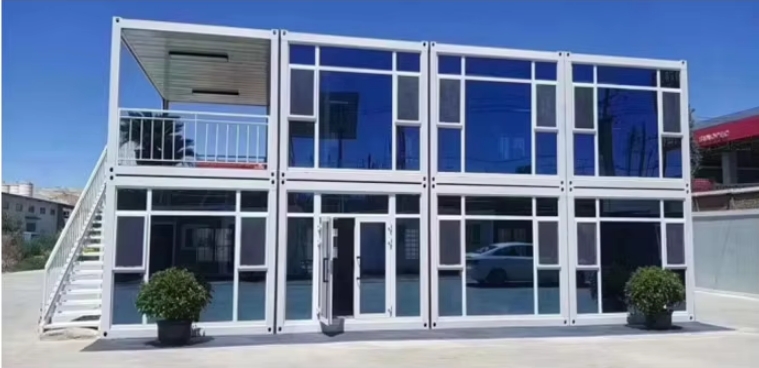
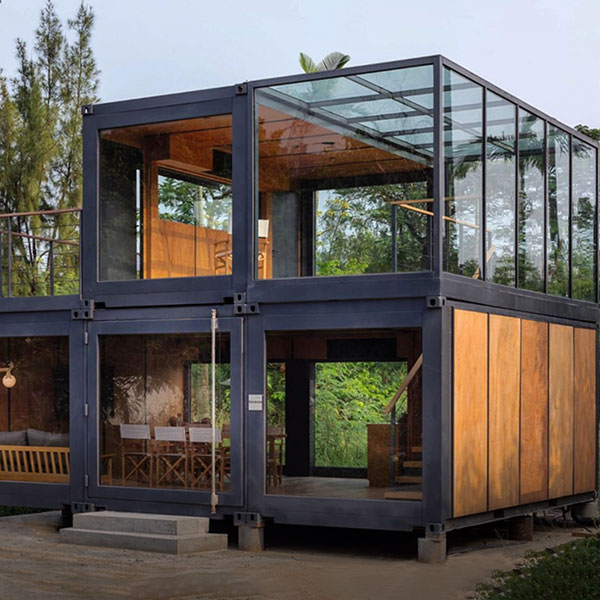
When you cut out large sections for panoramic windows, sliding glass doors, or even just standard-sized openings, you sever the load-bearing skin. You've removed a piece of the structure that was actively resisting twisting (torsional) and bending (flexural) forces. Without proper reinforcement, the wind pressure pushing against one side of the home can cause the entire structure to rack, twist, or even buckle.
To counteract this, heavy-duty steel framing (like square tubing or I-beams) must be welded in place around every single opening. This new frame has to do the job that the removed piece of corrugated steel was doing. It's not just about trimming the hole; it's about building a new skeleton inside the skin. Skimping on this step is one of the most common and dangerous mistakes in DIY container home construction.
The Peril of Multi-Container Connections
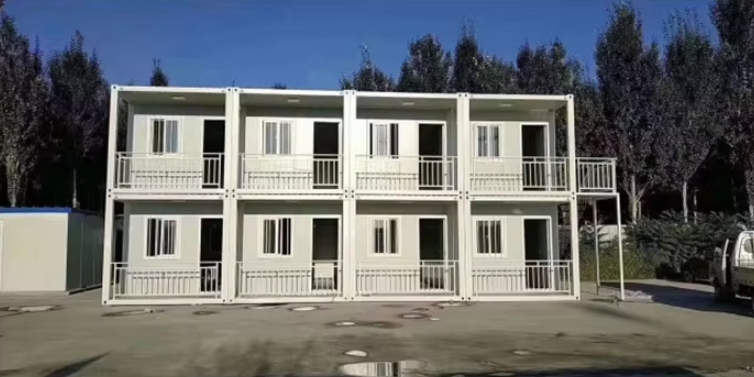
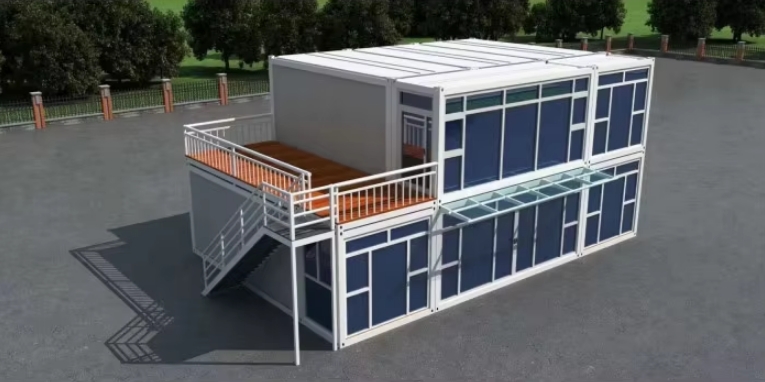
Many beautiful container homes are made by joining multiple units together to create larger living spaces. This process involves removing entire walls. While this creates a wonderfully open floor plan, it also creates a massive structural challenge. You are essentially removing the primary shear walls of two separate structures and asking them to act as one.
The seams where containers are joined are critical points. They must be meticulously welded and sealed not only to be watertight but also to transfer wind loads effectively across the entire structure. A poor connection can allow the units to shift independently under wind pressure, leading to catastrophic failure at the seams. It's worth noting that a professional structural engineer is non-negotiable for any multi-container design.
Beyond the Box: External Factors That Define Wind Resistance
Even a perfectly modified and reinforced container home can fail if it's not properly integrated with its environment. The container itself is only one part of a complex system that must work together to resist wind.
The Foundation: Your Anchor in the Storm
A container home just sitting on the ground is, at best, a very heavy shed. In a high-wind event, it can be pushed, slid, or even lifted by aerodynamic forces. The foundation is arguably the most critical element for wind resistance. Many experts agree that the choice of a container home foundation for high wind areas is a make-or-break decision.
- Concrete Slab: A monolithic slab provides a heavy, solid base. The container is then welded or bolted directly to steel plates embedded in the concrete. This offers excellent resistance to sliding and uplift. -
- Pier Foundation: Concrete or steel piers are sunk deep into the ground. The container is then anchored to the top of each pier. This is a great option for sloped lots and can be engineered to provide immense uplift resistance, essentially locking the home to the earth.
The connection between the container and the foundation is where the battle is won or lost. Simply resting it on piers is not enough. It must be physically anchored using methods like welding, specialized twist locks (the same kind used on ships), or heavy-duty bolts.
Roof Design and Aerodynamics
A container's flat roof is not aerodynamically ideal. Wind flowing over the top can create significant uplift pressure, essentially trying to pull the roof off. This is why many container homes in windy climates have a separate, pitched roof built over the original container roof.
A well-designed hip or gable roof not only helps with water shedding but also improves the home's aerodynamics, encouraging wind to flow over and around the structure rather than creating massive pressure zones. However, a poorly attached roof can become a giant sail, catching the wind and peeling off, potentially taking part of the container structure with it.

Fortifying Your Fortress: Engineering for Extreme Weather
So, how much wind can a shipping container home withstand? The answer is: it depends entirely on how well it's engineered. A properly designed and constructed container home can be one of the safest structures in a hurricane or tornado. It's all about proactive design and reinforcement.
Strategic Reinforcement and Bracing
The key is to replace the strength you remove. This involves more than just framing windows. For homes with large open-plan sections made from multiple containers, internal steel posts or shear walls may be necessary to prevent racking. A structural engineer will perform calculations to determine the specific wind loads your home will face based on your location and will prescribe the exact size and thickness of the steel reinforcements needed.
Hurricane-Rated Components
When strengthening container homes for hurricanes, the components you add are just as important as the container itself. This means installing impact-rated (hurricane-rated) windows and doors. These products are designed and tested to resist both high wind pressures and impacts from flying debris—a critical factor in a major storm. A standard residential window will shatter instantly, compromising the building's envelope and leading to a dangerous internal pressurization that can blow the roof off from the inside.
Landscaping as a Line of Defense
Don't underestimate the power of strategic landscaping. Planting rows of hardy trees and shrubs as windbreaks can significantly reduce the wind speed that directly hits your home. While not a substitute for proper engineering, it's an effective supplementary layer of protection.
The Final Verdict: A Matter of Engineering, Not Chance
In the end, the discussion around container homes wind resistance limitations isn't really about the inherent flaws of the container. It's about the skill, knowledge, and investment put into the conversion process. An unmodified shipping container is a beast, but a poorly modified one can be a liability.
The strength is there, waiting to be harnessed. But it must be respected. By working with experienced architects and structural engineers, using robust reinforcement techniques, building on a solid foundation, and choosing storm-rated components, a container home can be transformed from a simple steel box into a formidable fortress. The safety and resilience of your home shouldn't be left to the romantic notion of an indestructible box; it must be guaranteed by deliberate, intelligent engineering.
For more detailed information, please visit our official website:Container homes wind resistance limitations
About the author: David Chen is a structural engineer and sustainable building consultant with over 15 years of experience specializing in alternative construction methods. He has overseen numerous container home projects in coastal and high-wind regions, focusing on creating resilient and safe structures. David is passionate about demystifying the engineering behind unconventional homes and empowering builders with the knowledge to construct durable, long-lasting dwellings that stand up to the forces of nature.