Beyond the Box: Engineering a Resilient Container House
As the Director of Structural Engineering, I’ve spent over two decades analyzing, designing, and deploying structures in some of the world's most demanding environments. In that time, I’ve seen the concept of the Container House evolve from a niche curiosity into a mainstream solution for rapid, scalable, and versatile construction. The appeal is obvious: speed, modularity, and a perception of inherent strength. However, this perception is where procurement decision-makers face their greatest risk. A shipping container is designed to be strong in specific ways—for stacking and enduring maritime transit. Converting it into a safe, durable, and efficient habitable structure is a complex engineering discipline, not a simple act of modification.
Too often, we are brought in to consult on projects where initial savings have evaporated into costly long-term problems. We’ve seen structural warping from improperly reinforced openings, catastrophic insulation failure leading to condensation and mold, and persistent water ingress from poorly executed welds and seals. These are not material defects; they are engineering failures. They stem from a fundamental misunderstanding that a container house is a product to be bought, rather than an engineered system to be specified. Our entire philosophy is built around correcting this misconception. We don't just sell boxes; we deliver engineered environments, and the difference is in the details that ensure performance, safety, and a predictable total cost of ownership.
The Critical Gap: Common Failures and Our Diagnostic Approach
The market is saturated with suppliers offering seemingly identical container house units. Yet, performance varies dramatically. Why? The answer lies in the unseen. A procurement manager sees a steel box with a door and a window; our engineering team sees a complex interplay of thermal dynamics, load paths, and material science. The most common failures we diagnose in competitor products or poorly specified projects are almost always traced back to a handful of critical oversights.
First is the mishandling of structural modifications. Cutting an opening for a large window or doorway in a corrugated steel wall is akin to cutting a hole in the fuselage of an aircraft; it must be meticulously reinforced to redistribute the loads. We’ve analyzed units where simple, inadequate steel tubing was welded around an opening. Under simulated wind or snow loads in our lab, these frames buckle, transferring stress to the window seals and leading to leaks or even glass fracture. Our approach begins with Finite Element Analysis (FEA) before a single cut is made. We model the specific loads for the unit's intended climate and use, designing a reinforcement framework that becomes an integral part of the structure, not a mere patch.
Second, and perhaps more insidious, is thermal bridging. Steel is an excellent thermal conductor. Without a sophisticated insulation and vapor barrier strategy, every steel stud and frame member becomes a highway for heat to escape in the winter and enter in the summer. This not only drives up energy costs but also creates cold spots on interior walls where condensation forms, leading to rust, material degradation, and hazardous mold growth. We traced one client's chronic moisture issues to an insulation approach that simply filled the cavities with spray foam, ignoring the steel frame itself. Our solution involves a proprietary combination of cavity insulation and a continuous exterior thermal break, a method that results in a 30% reduction in thermal bridging compared to standard applications. Are you evaluating your structures based on initial cost, or on the total cost of ownership over a decade of service?
Finally, there's the issue of material specification and preparation. Using standard shipping containers without verifying the grade of the Corten steel or its history can be a gamble. Some have been exposed to corrosive chemicals or have hidden structural damage. We build our units from scratch using certified, high-tensile steel, allowing us to control the entire lifecycle and guarantee material integrity from day one. This diagnostic, engineering-first mindset is our primary value proposition.
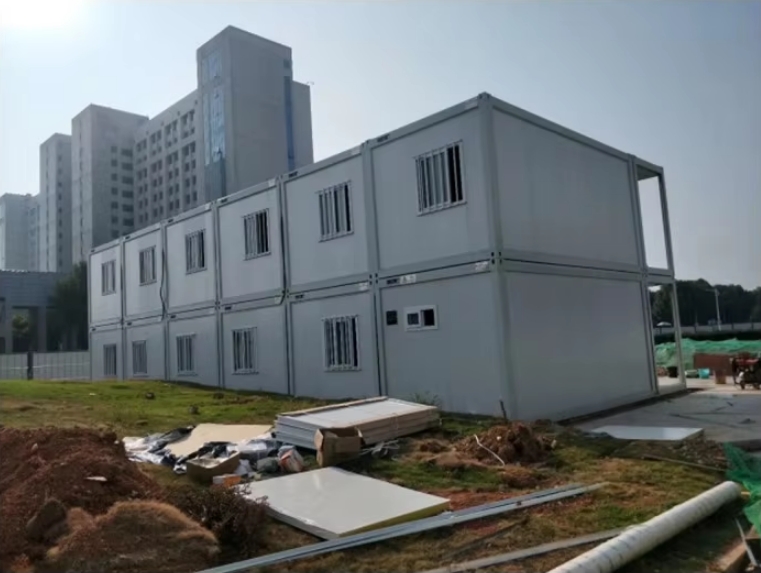
The Engineering Core of a Superior Container House
A truly resilient container house is defined by the precision of its engineering and the quality of its components. This is where our authority as an engineering-led manufacturer becomes your greatest asset. We obsess over the details that guarantee performance, longevity, and safety, moving far beyond the baseline specifications that govern the industry.
Our design process is rooted in a "first principles" approach. Every project begins not with a standard model, but with a deep dive into the application's specific requirements. This includes climate data, seismic codes, wind load calculations, and the intended operational lifecycle. This data feeds into our simulation software, where we model the entire structure. We can predict how it will behave in a hurricane, under a heavy snow load, or during a seismic event. This digital twin allows us to optimize the design for strength and material efficiency before any steel is cut.
Material selection and fabrication are governed by uncompromising standards. We exclusively use new, certified ASTM A606-4 or equivalent Corten steel for our structural frames and panels. The inherent corrosion resistance of this material is just the starting point. Our surface preparation protocol involves a multi-stage process of shot blasting and priming before the application of marine-grade epoxy coatings. This creates a finish that is not only aesthetically superior but also provides a formidable barrier against environmental degradation. In our accelerated corrosion testing chambers, our coated steel samples withstand over 2,000 hours of salt spray exposure with no signs of substrate failure—double the industry standard.
Welding is another area where our engineering discipline shines. The structural integrity of the entire unit depends on the quality of its welds. Our facilities utilize a combination of robotic and certified manual welding. Every structural weld is subject to stringent quality control, including ultrasonic testing on critical joints. We maintain a weld penetration variance of less than 5% across all structural seams, a tolerance that ensures consistent, predictable strength throughout the entire module. This level of precision prevents the microscopic stress fractures that can propagate over time and lead to catastrophic failure.
From Remote Worksites to Bespoke Retreats: Applications in Focus
The theoretical excellence of our engineering is best demonstrated through its real-world application. We have deployed our container house solutions across a spectrum of industries, each with its unique challenges and success metrics.
One of our most challenging projects involved creating a durable container house for remote industrial sites to serve as living quarters for a mining operation in a region with extreme temperature swings, from -40°C in winter to +35°C in summer, coupled with high winds. The client’s previous solution—traditional temporary structures—suffered from constant maintenance issues, poor energy efficiency, and a short service life. Our solution was a series of interconnected, highly insulated modules. The engineering focus was on thermal performance and airtightness. By implementing our advanced insulation system and specifying triple-pane glazing, we delivered units that maintained a stable interior climate with 40% less energy consumption than their previous structures. Furthermore, the modular nature and robust construction meant the entire camp was deployed and operational in 3 weeks, a 60% reduction in setup time compared to their previous methods. The ROI was clear: lower operational energy costs, near-zero maintenance, and improved living conditions for their staff.
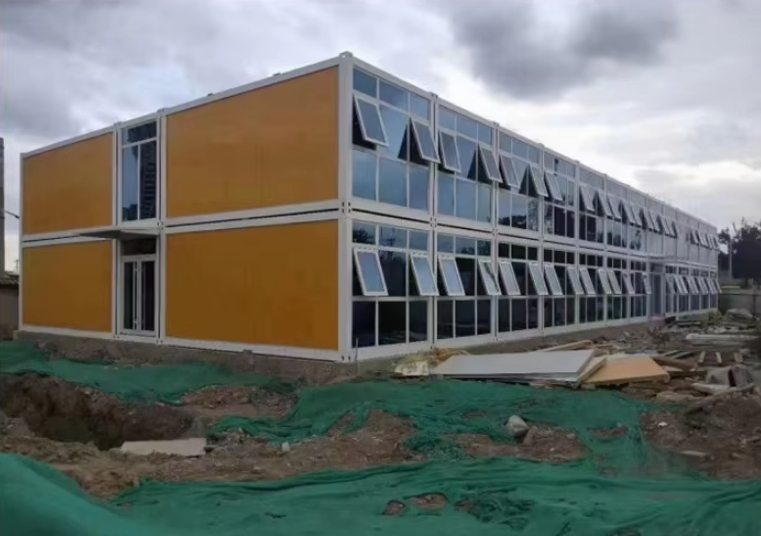
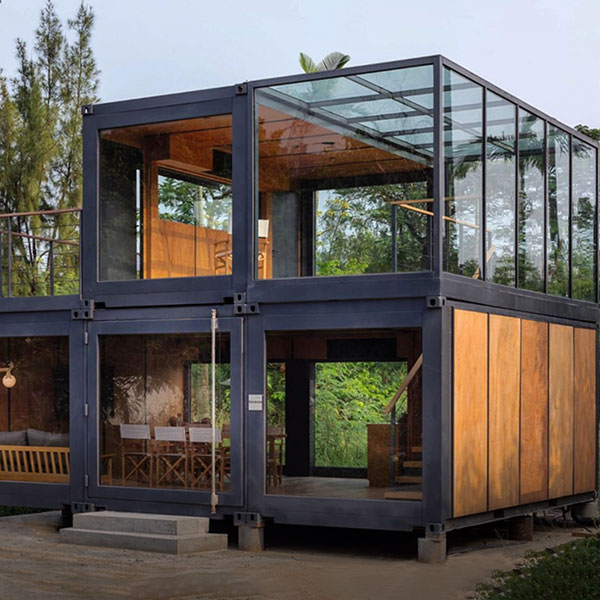
On the other end of the spectrum, we partnered with a developer creating a boutique eco-resort. Their need was not for industrial durability but for aesthetic flexibility, sustainability, and speed to market. They required 12 unique guest cabins, each with a specific layout and a high-end finish, integrated into a sensitive natural landscape. Our team worked directly with their architects to translate their vision into a manufacturable design. We engineered custom cantilevered balconies and floor-to-ceiling glass walls that would have been impossible with standard container modifications. Because our units were fabricated off-site in our controlled facility, on-site disruption was minimized, protecting the local environment. The entire resort was ready for guests in just four months, allowing the client to start generating revenue a full season earlier than a conventional build would have allowed. The project demonstrated that the principles of modular construction can deliver not just efficiency, but also high design value.
Manufacturing a Reliable Container House: Our Quality Doctrine
A brilliant design is only as good as its execution. Our manufacturing facilities are where our engineering principles are transformed into tangible, reliable assets. We have built a production ecosystem that prioritizes quality, traceability, and scalability, underpinned by a culture of continuous improvement.
Our production line is a hybrid of skilled craftsmanship and advanced automation. Structural frames are assembled in precision jigs that ensure perfect dimensional accuracy, module after module. Automated plasma cutters and robotic welders handle high-volume components, delivering a level of consistency that is simply unattainable with purely manual methods. This automation is complemented by our team of certified technicians who oversee complex assemblies, electrical and plumbing installations, and final finishing.
Quality is not a final inspection; it's a process embedded at every stage. We operate under a rigorous quality management system, with documented checkpoints throughout the build. A key differentiator is our system of end-to-end digital twin traceability. Every major component, from steel beams to window units, is tagged and tracked in our system. This creates a complete digital record for each container house we produce, detailing material origins, fabrication dates, inspection results, and the technicians involved. This data is invaluable for quality control, and it provides our clients with a complete, transparent history of their asset.
Before any unit leaves our facility, it undergoes a battery of performance tests. This is not a simple visual check. We conduct a full-system pressurization test to detect any air leaks in the building envelope. A timed water ingress test, simulating hours of wind-driven rain, is performed on all windows, doors, and seams. Electrical and plumbing systems are pressurized and tested to levels far exceeding normal operating conditions. This rigorous, evidence-based validation process is our promise to you: the performance we designed is the performance you receive.
Your Partner in Execution: Service, Customization, and Delivery
We recognize that procuring a container house is a significant investment and a critical component of your project's success. Our commitment extends beyond manufacturing to encompass a comprehensive service framework designed to ensure a seamless experience from initial concept to final delivery.
The journey begins with a collaborative technical consultation. You are not handed a catalog; you are partnered with an engineering liaison. This expert serves as your single point of contact, working to understand your specific needs, constraints, and objectives. Whether you require a single bespoke unit or a phased delivery of hundreds of modules, our team has the expertise to guide you. We are transparent about lead times, which are tiered based on design complexity and production volume, and we work with you to develop a schedule that aligns with your project timeline. For custom projects, we facilitate a detailed design review process, including material samples and 3D renderings, to ensure the final product precisely matches your vision.
To support your decision-making, we have established a clear process for technical evaluation. This often involves:
- Initial Scope & Feasibility Study: A collaborative session to define project goals, site conditions, and regulatory requirements.
- Conceptual Design & Budgetary Estimate: We develop a preliminary design and provide a detailed cost framework.
- Detailed Engineering & Material Specification: Upon engagement, our full engineering team refines the design for manufacturing.
- Production Milestones & Reporting: We provide regular updates and inspection reports throughout the fabrication process.
- Logistics & Deployment Planning: Our logistics team coordinates global shipping, customs, and delivery to your site.
Our service model is built on the principle of partnership. We provide comprehensive documentation packages, including structural drawings, engineering reports, and installation guides. We assign a dedicated project engineering liaison to ensure clear communication and rapid resolution of any technical queries that may arise during deployment. Our global logistics network allows us to deliver to even the most remote locations, managing the complexities of international shipping and on-site coordination.
Ultimately, choosing a supplier for your container house project is a choice about who you trust to manage risk. Our entire process—from engineering and manufacturing to service and delivery—is designed to provide you with certainty. Certainty of performance, certainty of quality, and certainty of a partner who is as invested in the success of your project as you are.
We invite you to move beyond the commodity mindset and engage in a technical discussion about your next project. Let us demonstrate how a properly engineered Container House can be one of the most reliable and cost-effective assets in your portfolio. Let's build something durable, efficient, and designed for the future.
For more detailed information, please visit our official website:Container House
About the author: Dr. Alistair Finch is the Director of Structural Engineering at our company, with over 20 years of experience in modular construction and materials science. He specializes in designing structures for extreme environments and leads the R&D team responsible for our proprietary fabrication techniques. His work focuses on translating advanced engineering principles into reliable, long-lasting assets for clients worldwide.