Modular Accommodation: Revolutionizing Tourist and Vacation Stays
The global tourism industry has witnessed a significant shift towards sustainable and flexible lodging solutions, with modular accommodation emerging as a game-changer for scenic areas, campgrounds, and island resorts. This innovative approach to tourist housing combines functionality, environmental responsibility, and adaptability, addressing the unique challenges of hospitality in diverse and often sensitive landscapes. From mountain retreats to coastal getaways, modular structures are redefining how travelers experience destinations while minimizing ecological impact.
In scenic mountain areas, modular guesthouses have become a preferred choice for developers and conservationists alike. These structures, often nestled among forests or overlooking valleys, are designed to harmonize with natural surroundings rather than dominate them. Constructed using lightweight steel frames and eco-friendly panels, they impose minimal disruption on fragile ecosystems during both installation and operation. Unlike traditional concrete buildings that require extensive excavation and foundation work, modular units can be placed on elevated platforms or minimal footings, preserving the original terrain and vegetation. This approach not only maintains the visual integrity of the landscape but also protects soil stability and water runoff patterns—critical factors in mountainous regions prone to erosion.
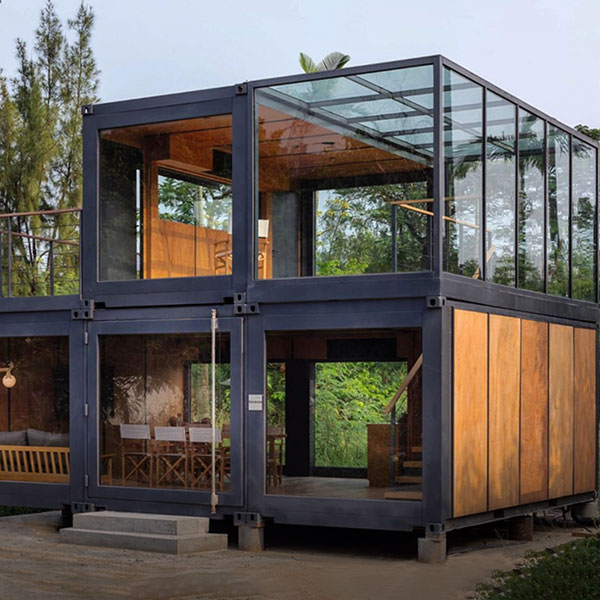
A compelling example of this application is found in forested景区 across Europe and North America, where modular民宿 complexes blend seamlessly with their wooded environments. These accommodations often feature large windows to maximize natural light and panoramic views, while exterior finishes using locally sourced wood or stone further enhance their integration with the surroundings. What truly sets them apart, however, is their operational flexibility. During peak tourist seasons—typically summer months and holiday periods—additional modules can be quickly assembled to increase room capacity, ensuring that demand is met without compromising guest comfort. Conversely, in quieter off-seasons, surplus units are disassembled and stored, reducing the physical footprint of the accommodation and lowering maintenance costs. This seasonal adaptability represents a stark contrast to fixed buildings, which remain underutilized for much of the year while continuing to occupy valuable land and consume resources.
Campgrounds and glamping sites have also embraced modular solutions to elevate the outdoor experience while maintaining a low environmental profile. Modern campers increasingly seek accommodations that balance nature immersion with comfort, and modular units deliver precisely that. These range from compact "glamping pods" equipped with basic amenities to larger family-sized modules featuring kitchens, bathrooms, and climate control systems. Their lightweight construction allows for easy placement in even remote campground locations, accessible via narrow roads or trails that would be impassable for heavy construction equipment. This accessibility ensures that even previously undeveloped areas can offer quality accommodation without the need for extensive infrastructure development.
Modular campground units often incorporate sustainable features that align with the eco-conscious values of many modern travelers. Solar panels integrated into roofing modules provide renewable energy, while water collection systems and low-flow fixtures minimize consumption. The use of non-toxic, recyclable materials further reduces environmental impact, appealing to tourists who prioritize responsible travel choices. Additionally, the ability to relocate entire campground setups—should environmental conditions change or new opportunities arise—adds a level of adaptability that traditional permanent structures cannot match.
Island resorts and coastal destinations present unique challenges for accommodation development, including limited construction materials, sensitive marine ecosystems, and vulnerability to extreme weather events. Modular度假屋 have proven particularly well-suited to these environments, offering solutions that address logistical constraints while protecting fragile coastal ecosystems. Fabricated off-site, often on mainland facilities, these modules can be transported to islands via barge or ship, reducing the need for large construction crews to reside on-site for extended periods. This approach minimizes disturbance to marine life during transportation and installation, a critical consideration for destinations reliant on healthy coral reefs, seagrass beds, or turtle nesting grounds.
Coastal modular units are also engineered to withstand harsh saltwater environments and high winds, with corrosion-resistant materials and reinforced structures that meet stringent hurricane or typhoon safety standards. Their elevated designs—often mounted on stilts—protect against storm surges while allowing natural coastal processes like sand movement to continue unimpeded. In tropical destinations, these features have made modular accommodations a resilient choice, capable of enduring seasonal weather challenges while providing guests with secure, comfortable lodging.
The adaptability of modular tourist accommodation to complex terrains represents one of its most significant advantages. Mountainous regions with steep slopes, coastal areas with shifting sand dunes, and forested sites with uneven ground pose significant challenges for traditional construction. Modular units, however, can be customized with adjustable foundations, cantilevered designs, or modular support systems that conform to the specific contours of a site. This flexibility allows developers to utilize land that would otherwise be considered unsuitable for building, reducing pressure on more accessible areas and distributing tourism impact more evenly across a destination.
In Japan's mountainous ryokan retreats, for example, modular annexes have been successfully integrated into terraced landscapes, with each unit positioned to maximize views while following the natural slope of the land. Similarly, in the Greek islands, modular guest houses cling to cliff sides, accessible via winding paths but constructed without altering the historic topography of the islands. These applications demonstrate how modular construction enables tourism development in challenging locations without sacrificing either safety or aesthetics.
The minimal site disturbance caused by modular accommodation aligns perfectly with the growing emphasis on sustainable tourism practices. Traditional construction in sensitive areas often results in deforestation, soil compaction, and disruption of wildlife habitats—impacts that can permanently damage the natural attractions that draw tourists in the first place. Modular installation, by contrast, involves minimal ground disturbance: foundations require small footprints, materials are delivered in pre-assembled components (reducing transportation trips), and on-site construction time is measured in weeks rather than months.
This reduced construction timeline not only minimizes disruption to local ecosystems but also lowers the impact on existing tourism operations. In popular destinations, where closing for extended construction periods would mean significant revenue loss, modular additions can be installed during off-peak periods with minimal interruption to guest experiences. Once operational, modular accommodations continue to demonstrate environmental benefits through their energy efficiency—many feature superior insulation and climate control systems that reduce energy consumption compared to older, traditionally built structures.
The "low-carbon" credentials of modular tourist accommodation extend beyond construction and operation to include end-of-life considerations. Unlike permanent buildings that often result in massive demolition waste when renovated or replaced, modular units can be disassembled and their components reused or recycled. This circular approach aligns with the principles of sustainable tourism, which emphasize reducing waste and maximizing resource efficiency. In some cases, modules that are no longer needed at one location can be transported to another site, extending their useful life and further reducing environmental impact.
For文旅项目 (cultural tourism projects) that aim to preserve local heritage while providing modern amenities, modular accommodation offers an ideal compromise. These projects often seek to balance visitor comfort with the protection of historic sites or traditional landscapes. Modular units can be designed to reflect local architectural styles—incorporating regional materials or design motifs—while remaining可拆卸 and non-intrusive. In China's ancient village preservation areas, for example, modular guest houses have been designed with traditional courtyard layouts and rooflines that complement historic buildings, yet their modular construction ensures that they can be removed without trace if preservation needs change in the future.
The economic benefits of modular tourist accommodation further strengthen its case as a preferred solution for hospitality developers. The ability to adjust room capacity seasonally allows operators to optimize staffing levels, utilities, and maintenance costs, improving overall profitability. For destinations with highly variable seasonal demand—such as ski resorts or beach destinations—this flexibility prevents the financial burden of maintaining unused capacity during low seasons. Additionally, the faster construction timeline of modular units means that accommodation can become revenue-generating much sooner than traditional builds, accelerating return on investment.
In conclusion, modular accommodation has transformed the landscape of tourist and vacation lodging, offering solutions that are both environmentally responsible and operationally flexible. From mountain景区民宿 that adapt to seasonal demand fluctuations to coastal度假屋 designed for minimal ecological impact, these structures demonstrate how tourism development can coexist harmoniously with natural environments. Their ability to navigate complex terrains, reduce site disturbance, and align with low-carbon principles makes them particularly well-suited to the evolving needs of sustainable tourism. As travelers increasingly prioritize destinations that demonstrate environmental stewardship, and as developers seek innovative ways to balance profitability with preservation, modular accommodation is poised to play an increasingly central role in the future of hospitality. By combining functionality with ecological sensitivity, it proves that quality tourist experiences need not come at the expense of the natural and cultural treasures that make destinations unique.